
Skid Steer vs. Track Loader – Which to Use?
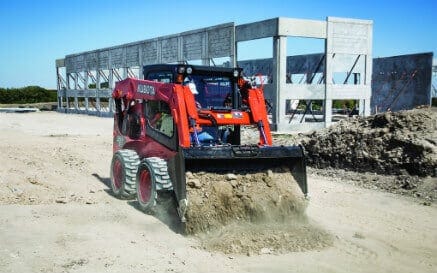
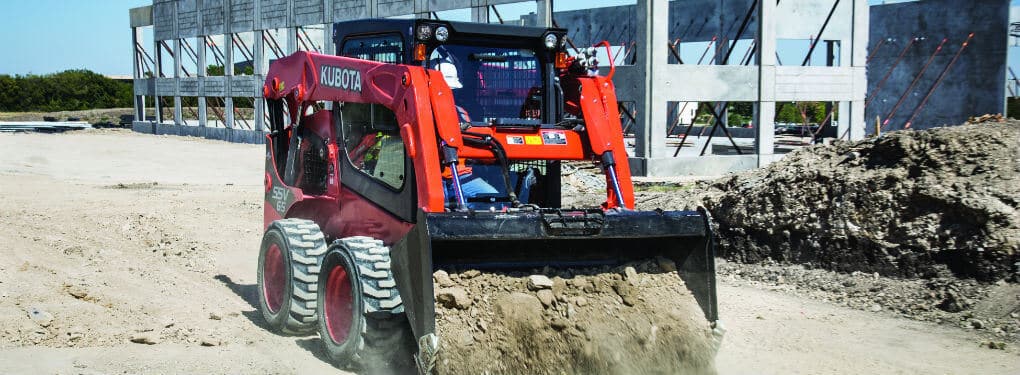
If you’re trying to figure out the right loader for your job site, you’re probably stuck on the classic skid steer vs track loader decision. And sure, both machines do a lot of the same functions, but the significant differences come down to the surface you’re working on, how much maneuverability you need, and your budget.
Skid Steers vs. Track Loaders
First off, skid steers and track loaders aren’t that different in terms of what they can do. Both are super versatile pieces of construction equipment with a compact size that’s perfect for getting into tight spaces and busy areas. You’ll often see both handling earthmoving tasks, lifting materials, or working with different attachments skid steers use – like a bucket attachment, pallet forks, augers, trenchers, and more.
So what’s the primary difference? It’s how they move. Skid steers run on wheels. Track loaders run on tracks. And that changes a lot.
Skid Steer with Tires
Skid steers move on four fixed axles using a skidding motion to turn. That gives you zero radius turning capabilities, which is huge on a crowded job site. The maneuverability skid steers offer is hard to beat — especially if you’re working on flat surfaces or hard surfaces like asphalt, concrete, or compacted ground.
Because a skid steer’s wheels roll faster and don’t rely on slow moving tracks, they’re often better for jobs that need more speed or cover longer distances.
Pros of Skid Steers:
- Better on hard, flat ground
- Faster travel speeds
- Wheels are cheaper and quicker to replace
- Great for tight turns in small spaces
Cons:
- Not great on uneven terrain or soft terrain
- Tires wear down fast
- Can cause compacted dirt, which isn’t ideal for landscaping
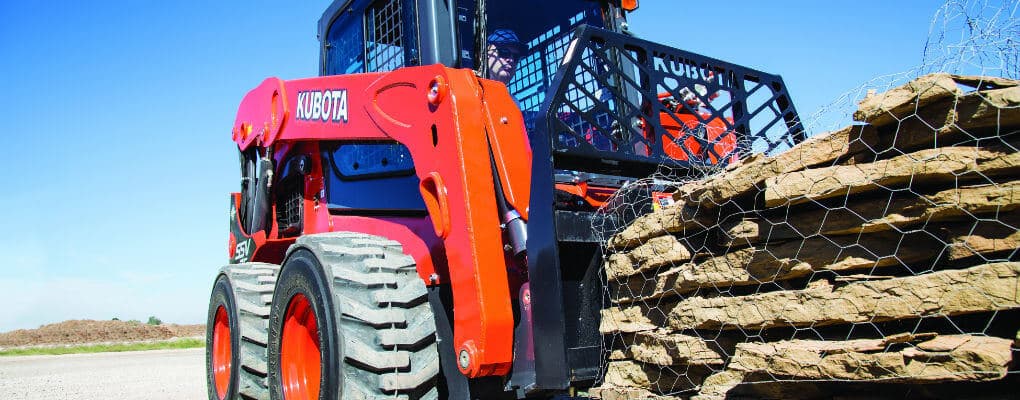
Bobby Ford Tractor and Equipment’s Kubota skid steers are the superior choice for construction and landscaping on even ground.
Compact Track Loader
Track loaders run on two parallel tracks, which gives them more weight distribution and enhanced traction. That makes them the better pick for uneven ground, grassy terrain, and soft surfaces like mud, snow, or sand. Because of how the parallel tracks spread out the machine’s weight, they’re way less likely to sink into the soil or mess up the job site.
They’re slower, yeah. But in tough conditions, slow moving tracks win the day.
Pros of Track Loaders:
- Stronger grip on soft terrain and uneven surfaces
- Doesn’t compact the ground as much
- Can work through rain, mud, and rocky terrain without getting stuck
- Feels more stable on hills or sloped areas
Cons:
- More expensive up front and for maintenance
- Slower than skid steers
- Lack slow moving tracks means some operators feel limited in open spaces
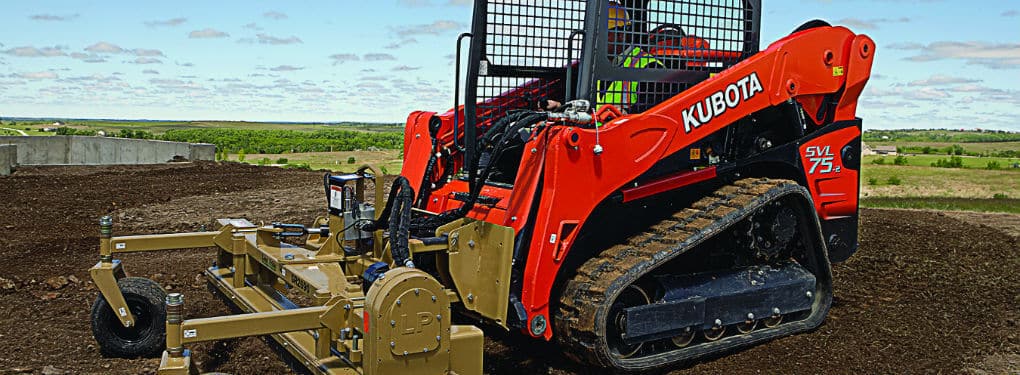
Kubota track loaders will rise to the challenge in rugged conditions providing optimal grading options for lawns and construction sites.
Track Loader Choice – Steel or Rubber?
Most conventional track loaders come with tracks made of steel or rubber. The choice of track-type should depend on your budget, the topography of the construction surface, and the need for extra traction.
Pros of Rubber Tracks
- Gentler on soft ground, dirt, and grass, as they will not tear up the surface as much as steel tracks
- Significantly cheaper to purchase and replace than steel tracks
- Better vibration absorption as compared to steel which results in a smoother handling experience
- Less noisy option for working in areas where noise complaints might be a concern (residential areas)
- Tracks made from rubber are more speed-friendly than those made of steel
Pros of Steel Tracks
- Provides improved flotation and traction in wet or slippery conditions
- Extra counterweight from steel tracks improve the overall stability while carrying loads
- Resistance to damage by hard debris like concrete, asphalt or steel shards
- Extended durability/thread life
- Adjustable length of steel tracks reduces tension, minimizing the chances of the tracks snapping
- Optimal functionality in both cold and warm weather conditions
Can You Put Tracks on a Wheeled Skid Steer?
Most times, deciding whether to opt for a skid steer with tracks or tires can be quite challenging as a host of factors have to be considered. The best solution may be to select a vehicle that can be converted into either type depending on your construction or landscaping requirements.
There is a good selection of hybrid skid steer loaders available for construction involving both even and rugged areas. These skid steers have wheels which can be mounted with rubber or steel tracks essentially converting them into functional compact track loaders.
However, the Kubota SVL and Kubota SSV are uniquely designed machines, and we do not recommend putting tracks on the SSV series machines.
How Long Do Skid Steer Tracks Last?
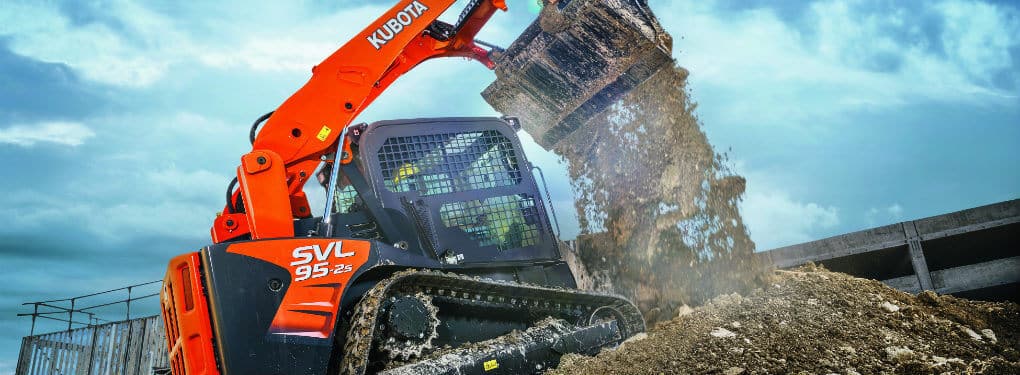
Due to the nature of the terrains they operate, compact loader tracks withstand an enormous amount of pressure in the course of their life spans. Based on production quality, rubber compact loader tracks will last between 1200 to 1600 cumulative work hours. Tracks made of steel usually last at least two and half times longer than their rubber counterparts. When handled by an experienced operator, skid steer tracks will last a few extra hundred hours regardless of type.
Picking the Right Loader for Your Job Site
Choosing between skid steers and track loaders isn’t always easy, but here’s a quick cheat sheet:
- Flat, dry, hard surfaces? Go skid steer.
- Soft, wet, uneven terrain? Go track loader.
- Need speed? Wheels.
- Need traction? Tracks.
- Working in tight spaces? Both will do fine thanks to their compact size, but the skid steer might feel snappier.
Trust Bobby Ford with All Your Machinery Needs
At Bobby Ford Tractor and Equipment, we are dedicated to providing all customers with equipment and services of the highest standards. Our expert staff is on hand to offer professional advice to enable you to select the best equipment for your unique application.
For more information about Bobby Ford, your authorized Kubota Dealer in the Greater Houston Area, please contact us online today, or stop by our showroom in Angleton to test drive your new purchase!